Just How to Obtain Exact Dimensions From Best Fence Installers
When people say they desire "the ideal measurements," they generally imply something: they desire the fencing to fit the space without dramatization. No sagging entrances, no panels that end up also short, no awkward voids where the backyard squeezes, and not a surprise change orders since the installer's measuring tape really did not match reality on the ground.
The reality is, exact dimensions are not nearly accuracy with a tape. They have to do with reviewing the site the way a skilled team does, validating what the illustrations presume, and recording decisions prior to anyone starts cutting. The most effective fence installers earn their credibility long before they drive the initial blog post, and their procedure turns up in the details of just how they measure.
Below is how to get dimensions that hold up, even if your building is less than completely rectangular, your incline is visible, or your lot line is "primarily apparent" yet not really settled.
Start with the measurements you currently have, after that confirm what matters
A great deal of property owners hand installers a strategy they got from a previous service provider, an old survey, or a sketch they made after checking out the property on a map. Those products are a beginning factor, however they rarely inform the full tale at fence height.
From experience, the highest-risk mismatch takes place when the strategy references something that is not where individuals think it is. Obstacle lines could be gauged from a sidewalk edge theoretically, but in the real life, the visual returns and the sidewalk density differ. A property line shown on a map can be off enough that "simply trimming a little" becomes "we run out compliance" once allows are in.
So as opposed to treating existing dimensions like fact, treat them like assumptions that require field verification. The most effective fence contractors will certainly do more than compare numbers theoretically. They will validate alignment, check blockages, and step from fixed, visible referral points, not from "where it resembles the line is."
If you are collaborating with best fence companies, ask on your own one question: do they measure in a manner that lets you follow their logic? If their dimensions are mystical, you can not confirm them. If their measurements are repeatable, you can.
Measure for the fencing you really desire, not the fence you imagined
A fence's "size" is hardly ever the whole story. The moment gateways get in the image, the dimension comes to be concerning clear opening size, not total affordable fencing installers fencing size. With a privacy fence, panel design and post spacing influence exactly how evenly points burst out along the run.
Here is a scenario I see often. A house owner desires a straight run of boards from point A to factor B. The installer gauges that distance and proposes typical blog post spacing. Then, during layout, the last section lands in a manner that forces a narrow sliver. That bit may look penalty from a range, but up shut it has a tendency to come to be the important things every person notices.
This is where exact dimension is truly design dimension. The team needs to make a decision very early just how they will deal with strange spans, whether they will certainly adjust article spacing slightly to maintain board widths constant, and how they will certainly deal with corners. Those selections influence the last count of materials and, much more importantly, the means the fence cares for installation.
The installers that regularly supply a tidy coating step with completion lead to mind. They do not simply measure the residential or commercial property, they measure the fencing plan.
Use repaired reference points, not estimates
Accuracy depends on what you measure from. Lots of measurement mistakes are really "recommendation errors." A measuring tape run that begins with a site that is not constant in between people is a dish for disagreement.
Good dimension practice uses referrals like:
- Permanent edges you can re-find (structure corners, fully grown tree trunks, a survey marker area if it comes)
- Existing structures that will certainly not move (garage edges, foundation lines, concrete pads)
- Straight runs where the line is controlled (for example, a foundation wall surface as a positioning overview)
On irregular whole lots, installers frequently include their very own momentary recommendation system, such as setting format strings that adhere to the intended fence placement. That string line ends up being the gauging baseline for whatever else, including article locations, gateway placement, and panel alignment.
If you wish to obtain exact dimensions from the most effective fence installers in your location, ask to see the alignment method before any individual starts digging. A reputable team fits discussing exactly how they chose the standard and why.
Confirm building lines and problems prior to you fall in love with a layout
Fence measurements obtain unpleasant when the residential or commercial property line doubts or when obstacles use. Even when you have a survey, the fencing line may require to regard obstacles required by your town or by homeowner association rules.
This is not an academic concern. It influences the geometry. If your desired fencing line is changed inward or exterior for problems, the "same edge factors" you intended to connect no longer pair up. Unexpectedly the run sizes transform, and corner treatments transform too.
If you are unsure whether you have a present survey, it deserves arranging that out early. A study informs you where the lawful line is, but it additionally provides a means to resolve that line with the physical world. Many property owners purchase authorizations based upon an assumption that the line revealed on a map is exact enough. In technique, map overlays can be off, and the fence is not mounted in the map. It is mounted on the ground.
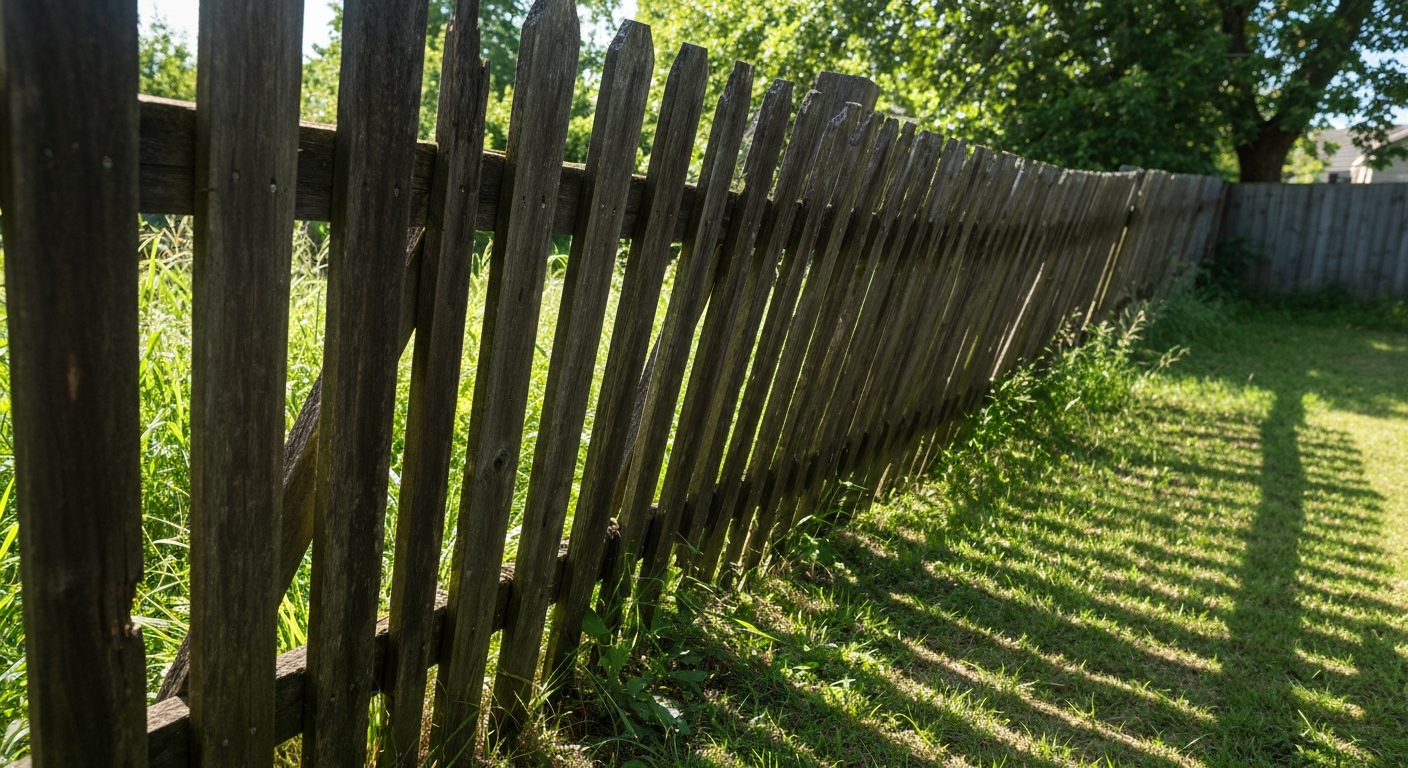
I once enjoyed a staff measure an outstanding, straight fencing line perfectly along what the home owner called "the limit." It looked great. After that the survey marker was discovered during design confirmation, and the boundary angle moved simply sufficient to require a reconfiguration of the run. The installer did not suggest with the home owner, they adjusted the format. That's what you desire from professional best fence companies, not someone who deals with area reality as optional.
Account for slope, grade, and just how the fence will certainly be improved the terrain
Even a little quality change influences message places and just how the fence leading line checks out aesthetically. Lots of homeowners focus on straight range and neglect vertical conditions. Installers who respect accuracy will gauge and plan for grade.
There are typically two typical approaches for timber and vinyl fences on unequal ground: stepping panels up and down to adhere to quality, or utilizing an extra uniform look by cutting/adjusting rails so the top line remains closer to degree. The best choice depends on your visual objectives, the fencing design, and the supplier's installation guidance.
Accurate dimension implies the installer ought to ask concerns like:
- Will the fencing bottom be stepped or racked with the rails?
- Does the material system allow for a certain quantity of quality variation?
- How will the gate run if the ground is sloped or uneven?
If a staff recommends a "level top rail, perfect spacing everywhere" remedy without analyzing grade, you are requesting for a fence that looks great just on day one and only from one angle.
A sensible indicator of skills is this: throughout dimension, the installer will remember of the lowest and acmes along the run. They will certainly mention exactly how that will impact panel elevations, picket sizes, or entrance clearance.
Don't ignore surprise challenges that impact measurements
Overhead or below ground barriers can turn a clean format right into a pricey rework. Often it is noticeable, like a tree also close to an article opening. Various other times it is not.
A few instances that regularly impact dimension precision:
- Underground energies that call for a safe trenching or uninteresting plan
- Sprinkler lines that go across the run
- Drainage swales or hidden downspout expansions that move where messages can sit
- Retaining wall surfaces or pathway sides that limit where rails can be anchored
When installers measure, they ought to be planning ahead to what the post hole in fact implies in the real world. If a crew measures an excellent message line yet does not consider where a post can reasonably be dug without hitting something, the "exact dimension" ends up being irrelevant.
If you desire the procedure to hold, coordinate with energy situating if your area needs it, and ask the installer how they will certainly manage challenges that appear throughout digging. Professionals might not promise perfection around every unidentified, however they will certainly have a prepare for how they will certainly record modifications and keep you informed.
Gate measurements are a various issue, so treat them differently
Gates are the location dimension mistakes become noticeable quick. A fencing run may be off by a half-inch and still look penalty. A gateway that is off by half an inch can bind, drag, or fail to lock properly.
Accurate entrance measurement depends upon the hinge side, the swing arc, the lock placement, and exactly how eviction framework will certainly rest relative to the fencing posts. Eviction opening needs to be determined with the last equipment and clearance in mind, not just with "the range between blog posts."
From the home owner side, a helpful frame of mind is to gauge the feature, not the gap. How will the gate open? Will it remove a parked automobile bumper? Exists an incline at the limit where the gate might tip? Are you intending an automated opener, which may need certain spacing or reinforcement?
The installers who provide dependable gateways step, dry-fit components if needed, and verify equipment placement before dedicating to cut lengths. That level of interest is how the best fence installers prevent the typical "works in the store, struggles on site" problem.
Understand how "article spacing" influences the complete run
Many fencings are built with standard message spacing and panel sizes. However standard systems still fulfill real-world sides, edges, and entrance sizes. When the total run length does not divide equally by the panel increment, the installer has to select a strategy.
Common techniques include:
- Adjusting the spacing somewhat throughout the run to maintain panel sizes consistent
- Cutting down the initial or last panel (much less optimal visually on some styles)
- Using edge messages with specific spacing policies that change nearby spans
- Repositioning an article to fit an entrance framework so the remainder can remain within standard ranges
This is why "simply gauge the length" is insufficient. Precise measurement ought to create a format strategy that makes those trade-offs specific. The homeowner benefits when the installer shows how they will manage the "non-even" portions before installation.
If you are buying best fence contractors, ask whether they will recommend a layout technique for strange spans. The response tells you a great deal concerning whether they measure like a manufacturing staff or like a group that cares about fit and finish.
Document the layout so you can capture problems early
A clean setup generally begins with evidence. Proof can be as straightforward as images of the design string line, keeps in mind about referral factors, and a composed quote that matches the determined counts.
Good documents issues due to the fact that once post holes start, it ends up being more challenging to deal with design choices. If an installer gives a dimension summary that includes run lengths, variety of articles, gate opening size, and edge counts, you can cross-check the logic.
If you have actually ever before taken care of a specialist who "estimated" and afterwards reconstructed the mathematics midstream, you know the stress that creates. Precision is partly technical. It is additionally procedural.
The best fence companies have a tendency to be calm, organized, and transparent during dimension since they want less surprises later on. Their documents is usually just how they protect their very own job, not just your tranquility of mind.
A practical checklist for getting exact measurements
If you desire a simple way to guide the discussion with installers, use this list. It is not about micromanaging, it is about making certain the measurement process covers the vital points.
- Confirm what reference points they use for each run, specifically at corners and near gateways
- Ask whether they will certainly confirm residential property line alignment and needed troubles prior to last design
- Make certain they plan for incline, quality modifications, and the fence style's technique for handling it
- Review how they handle odd spans so the very first and last areas look deliberate, not covered
- Request a created measurement recap that matches the products proposal
What to ask throughout the quote to separate "close adequate" from genuinely accurate
Questions are a tool. The ideal questions do not trap any individual, they encourage quality. If an installer provides regular, grounded answers, you can trust their process.
Here are five that have a tendency to emerge dimension capability quickly.
- "Exactly how do you outlined the line in the field, and just how do you validate placement prior to excavating?"
- "If the gauged run does not split uniformly into your panel system, what is your approach?"
- "Exactly how will you gauge and verify gateway opening size and hardware clearance on a slope?"
- "What obstacles do you check for before settling message areas, and how do you handle adjustments?"
- "Will you document the layout, and exactly how will you report any dimension changes prior to installment?"
If you hear obscure responses like "we'll figure it out when we're there," you are tackling danger. It might still work out, but you are no longer purchasing accuracy, you are getting hope.
Common measurement mistakes and exactly how professionals prevent them
Even with excellent installers, measurement mistakes occur. What issues is whether the crew captures them early and fixes them responsibly.
Here are the most frequent categories of problem I have seen, in addition to the type of actions that prevents them.
Mistake: measuring from the wrong corner or landmark.
Often the "edge" on a plan is not the edge on the ground. The very best installers re-measure from the very same physical standard every time, and they verify that the baseline is tied to something stable.Mistake: overlooking the fence product's panel or component rules.
A fencing quote that makes use of common spacing numbers can be off by product constraints. Experts measure with the actual element dimensions and installation guidelines, not with a presumed standard.
Mistake: dealing with slope as an afterthought.
If the crew waits until after messages are set to determine just how the fence complies with quality, the layout can require ugly voids or panel cuts. Experienced installers analyze quality throughout dimension and plan for it from the beginning.Mistake: gateway clearance not measured in a practical way.
A gate that gets rid of the blog post however not the ground is a real problem. Skilled installers measure entrance swing clearance and threshold conditions early.Mistake: assuming the residential or commercial property line is obvious.
When limits are vague, "close enough" ends up being a legal and economic threat. Specialists confirm positioning and setbacks early.The regular pattern is this: precise dimensions are not only about the numbers. They are about the installer's willingness to inspect assumptions.
A brief story from the area: the half-inch that saved a week
A home owner called me out due to the fact that their neighbor's fencing line looked ideal and theirs did not. The quote had actually been done rapidly, and the installer had measured "from the very same factors" as the next-door neighbor. Theoretically, whatever matched. On the ground, there was a half-inch inconsistency at an edge where a concrete side satisfied a landscaping border.
Half an inch does not seem like much. However on a fence kept up several panels, that half-inch becomes a forced choice: either cut a panel that needs to award winning fence company not require cutting, or move a post and danger misaligning eviction. That week got costly because the design solution took place after material had been prepped and the crew had already set a few posts.
The resolution was not dramatic. We re-established the standard, confirmed the edge recommendation, re-laid post placements, and adjusted the panel breakout approach. The fence wound up looking intentional, not "fixed."
The moral is simple: the most effective fence installers catch these tiny differences prior to work starts, because they measure in such a way that makes their design logic visible.
How to make dimension precision much easier for your installers
You can assist without hovering. A few activities from you can lower complication and lower the possibility of final corrections.
Clear accessibility issues. If the area behind trees and shrubs is tangled, measurement takes longer and recommendation points get blurry. Similarly, if you can mark where gateways or fencings need to connect to existing frameworks, you get rid of guesswork.
Also, if you have choices regarding the fence look, claim so when dimension takes place. For example, if you want matching board sizes around a corner, tell the installer upfront. They can plan the blog post positioning and panel breakout to match your priorities.
When home owners and installers are straightened early, dimensions become a shared procedure as opposed to a conflict.
Red flags that commonly show up when dimensions are not accurate
Sometimes you just find out measurements are incorrect once the fence is mid-install. You can minimize the chances of that by expecting particular behaviors.
If an installer can not explain how they decided on article areas, or if their quote is based upon a common layout that does not resolve edges and gateways, ask for clarification. If they are unwilling to show how they prepare for slope and odd spans, you are not obtaining a measurement process, you are getting an estimate.
If you are contrasting best fence installers, focus on whether they ask inquiries during the dimension browse through. The more thoughtful the questions, the more likely the installer is determining with the facts of your home in mind.
What "exact measurement" truly resembles in the final fence
At the end of the project, you need to be able to detect accuracy without a ruler.
Corners must align without unusual board voids. Panel areas must change in a manner that looks prepared, not pressed. Gates needs to open and close without scraping or binding. The leading line should look deliberate relative to the quality handling approach that was chosen.
Most significantly, the fencing must really feel silent under examination. If you can stand at one end and function your method along the run discovering consistent spacing and clean shifts, the dimensions were handled with care.
That kind of outcome normally comes from installers that determine more than as soon as, validate their referrals, and make early choices concerning the trade-offs that include real property.
Your following step: transform dimension right into a recorded plan
If you are working with contractors and you want precision, deal with dimension like the first stage of design. Ask for the area design approach, verify exactly how gate sizes will certainly be handled, and request a measurement summary that connects to the products proposal.
The best fence installers do not simply bring tools. They bring a process. They walk the line, comprehend grade, verify accessibility to referrals, and record selections so the construct can match the plan.
If you do that, you will spend much less time saying concerning half-inch surprises and more time taking pleasure in a fence that fits your lawn the way it was meant to. And in a market loaded with best fence contractors and best fence companies, that distinction is the one that shows up each day you look outside.